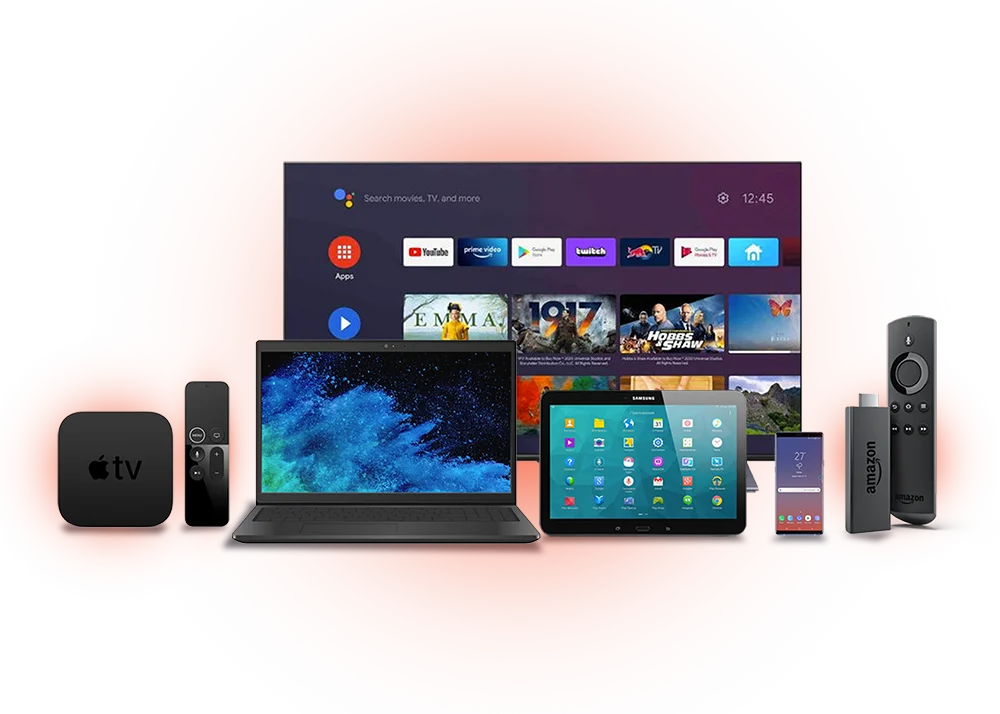
My name is Howdy Mikel, and I’ve been working with streaming technology long enough to remember when “high-quality video” meant a grainy 480p picture on a giant CRT television. Over the years, I’ve watched the streaming world transform, and one of the biggest revolutions has been IPTV, short for Internet Protocol Television.
In simple terms, IPTV is television delivered over the internet instead of through cable or satellite. Instead of receiving a fixed broadcast schedule, you get stream-on-demand, channel lists, 4K movies, live TV, and more—powered by the internet connection in your home.
When I first got into IPTV, I was blown away by how flexible it was. With the right setup and especially the right iptv encoder encoders you can stream content with a quality and reliability that often beats traditional television providers. The technology has become even more important as people look for the best IPTV provider, ones that deliver 4K channels, sports, and international content.
And that’s where the encoder comes in. Without it, none of this works.
Table of Contents
- Why a 4K IPTV Encoder Matters Today
- How I Started Testing IPTV Systems and Encoders
- What Makes a High-Quality IPTV Encoder Stand Out
- The Connection Between the Best IPTV Provider and the Right Encoder
- IPTV Free Trial Testing and What I Learned
- The Rise of 4K Live IPTV and Modern Streaming Expectations
- Key IPTV Trends Shaping the Future
- The Role of IPTV Resellers and How Encoders Impact Their Success
- My Personal Picks for the Best 4K IPTV Encoder
- How to Set Up a 4K IPTV Encoder the Right Way
- Troubleshooting Tips I’ve Learned Over the Years
- Final Word From HOWDY MIKEL
Why a 4K IPTV Encoder Matters Today
A lot of people ask me: “Why do I need a 4K IPTV encoder if my internet provider already delivers HD or 4K streaming?” My answer is simple if you want to stream your own content, start an IPTV service, manage a private broadcasting setup, or become an iptv reseller, the encoder is your beating heart.
A 4K iptv encoder encoders takes raw video signals maybe from cameras, broadcast feeds, or HDMI sources—and transforms them into a compressed digital format that can be streamed efficiently over the internet.
When you’re handling 4K live IPTV, the quality demands are higher. You need an encoder that supports modern compression formats like H.265/HEVC to reduce bandwidth while keeping the picture sharp.
From my own hands-on experience testing countless devices, I’ve learned:
- Cheap encoders will bottleneck your stream
- Good encoders stabilize your entire IPTV system
- A high-quality encoder reduces buffering
- Better encoding equals happier subscribers
If you care about the viewer experience—and I absolutely do—you need an encoder built for today’s standards.
How I Started Testing IPTV Systems and Encoders

I didn’t plan to become the “IPTV guy” among my friends and clients. It just kind of happened.
Years ago, I was working in digital media when someone asked me to help set up a local streaming system for a small sports league. We wanted to broadcast local games, family-friendly tournaments, and behind-the-scenes footage. At that time, 1080p was the gold standard, and nobody expected anything better.
But even then, I realized that encoding was everything. Our first attempts at streaming were a disaster—pixelated video, unstable playback, audio that drifted out of sync.
Finally, I bought my first professional-grade iptv encoder encoders, and everything changed. Suddenly, people watched the streams without complaints. The parents loved the quality. The coaches wanted replays. And I, for the first time, understood how critical encoding technology really was.
Ever since, I’ve tested countless encoders. Some cost under a hundred bucks; others cost more than a used car. And with the rise of best IPTV provider services and IPTV free trial hype everywhere online, people come to me wanting to know what equipment they actually need.
What Makes a High-Quality IPTV Encoder Stand Out
With so many encoders available today, people often ask me how to choose. So based on years of personal testing, here’s what separates the best from the rest.
Compression Technology
Modern IPTV needs HEVC/H.265. The older H.264 still works, but 4K content demands better compression to maintain quality without choking your bandwidth.
Low Latency
If you’re doing sports, gaming events, or any real-time streaming, you need minimal delay. Some encoders can shave latency down to under a second.
4K Input Support
This sounds obvious, but I’ve seen many “4K encoders” that technically only upscale HD signals. True 4K encoding needs real 4K input.
Stability
This is the big one. An encoder that crashes will take your entire IPTV service down. Over the years, I’ve learned to value stability even more than fancy features.
Scalability
If you plan to become an iptv reseller, or run your own platform, you need an encoder that can handle multiple streams simultaneously.
The Connection Between the Best IPTV Provider and the Right Encoder
Whenever people search for the best IPTV provider, they look at channel lists, sports packages, movies, and pricing. But behind the scenes, those top providers rely on extremely powerful encoders.
When I work with service operators, the biggest difference between mediocre and top-tier platforms is always the encoding infrastructure. Providers with stable 4K channels almost always invest in robust, commercial-grade encoders.
I’ve also tested IPTV free trial offers from dozens of providers. The ones that consistently deliver smooth 4K live IPTV nearly always use premium encoders with strong redundancy systems.
So if you’re planning to run your own IPTV platform—or even resell one—make encoding your top priority.
IPTV Free Trial Testing and What I Learned

People love IPTV free trials, and honestly, I do too. They give you a real-world look at how stable and well-managed the system behind a service is.
Here’s what I pay attention to whenever I test a trial:
- Does 4K content buffer?
- Does channel switching lag?
- Are sports channels stable?
- Does audio stay synced?
- Does the service crash at peak hours?
Nine times out of ten, problems with these tests can be traced to poor or overloaded encoding systems.
A 4K iptv encoder encoders that isn’t powerful enough will ruin the viewing experience. Providers who want to stand out in today’s market need equipment capable of keeping up with surging demand.
The Rise of 4K Live IPTV and Modern Streaming Expectations
When 4K TVs became mainstream, viewer expectations changed forever. People want ultra-clear sports channels, cinematic movies, and smooth motion. Anything less feels outdated.
4K live IPTV is now one of the strongest selling points for an IPTV provider, and it’s also one of the most challenging features to deliver.
From my experience:
- 4K streaming requires nearly double the processing power
- You need high-bandwidth internet on the encoding side
- A poor encoder will lead to terrible artifacts in 4K
- HEVC is mandatory for efficient 4K delivery
The market is moving fast, and any IPTV setup not equipped for 4K risks falling behind.
Key IPTV Trends Shaping the Future
After years in the industry, here are the IPTV trends I see becoming dominant:
4K and 8K Expansion
Viewers will soon expect 8K. Encoders must evolve.
AI-Driven Compression
Artificial intelligence is already improving video quality while shrinking file sizes.
Ultra-Low Latency Streams
From live news to e-sports, delays are becoming unacceptable.
Cloud-Based IPTV Platforms
More encoding and delivery processes are shifting to the cloud.
IPTV Reseller Growth
More people are entering the IPTV reseller space thanks to flexible pricing models and smart automation.
To keep up with these trends, modern encoders must be powerful, flexible, and easy to scale.
The Role of IPTV Resellers and How Encoders Impact Their Success

Many successful IPTV resellers don’t realize how much their upstream provider’s encoding quality affects their business. When I mentor new resellers, I always teach them this:
If the provider uses weak encoders, you will lose customers.
If the provider uses strong encoders, you will retain subscribers for years.
A reseller’s reputation depends entirely on the user experience.
My Personal Picks for the Best 4K IPTV Encoder
Based on years of real-world testing, here are the encoder types that consistently deliver the best results:
Professional-Grade Hardware Encoders
These are used by the biggest IPTV platforms. They offer unmatched stability and 24/7 operation.
High-End HDMI-to-IP Encoders
Perfect for smaller IPTV operators or sports bars that want to stream in-house content.
Cloud-Based Encoders With Real-Time Processing
Ideal for scalable IPTV operations.
I’ve worked with budget models and luxury units, and my conclusion is simple: the more you invest, the fewer problems you’ll have.
How to Set Up a 4K IPTV Encoder the Right Way
Based on years of testing, here’s the correct setup workflow:
- Use wired connections, never Wi-Fi
- Enable H.265 encoding for 4K
- Set a stable bitrate (6,000–20,000 kbps depending on content)
- Use proper cooling to avoid overheating
- Test audio sync regularly
- Monitor your upload speeds
- Use redundancy streams for critical broadcasts
The encoder can only perform as well as the environment allows.
Troubleshooting Tips I’ve Learned Over the Years
If your IPTV stream looks bad, don’t panic. After countless late-night troubleshooting sessions, here are the most common fixes:
- Lower the bitrate to avoid congestion
- Switch to a constant bitrate (CBR)
- Clean or replace HDMI cables
- Update firmware
- Reduce network load on the encoder
- Check for overheating issues
- Reboot the encoder after long operation
Most issues can be solved quickly if you know where to look.
Final Word From HOWDY MIKEL
If you want to run a stable IPTV system, start an IPTV service, or become a successful IPTV reseller, everything begins with the right iptv encoder encoders especially if you want to deliver 4K live IPTV that actually impresses your viewers.
A good encoder is the difference between a smooth, crisp, reliable service and a glitchy mess that frustrates everyone who tries your IPTV free trial.
After all these years in the field, I can confidently say:
If you want professional-level results, you need professional-level encoding.
That’s the real secret behind every best IPTV provider we’ve ever seen—and everything I’ve shared here comes straight from the experiences, wins, and mistakes of Howdy Mikel himself.